
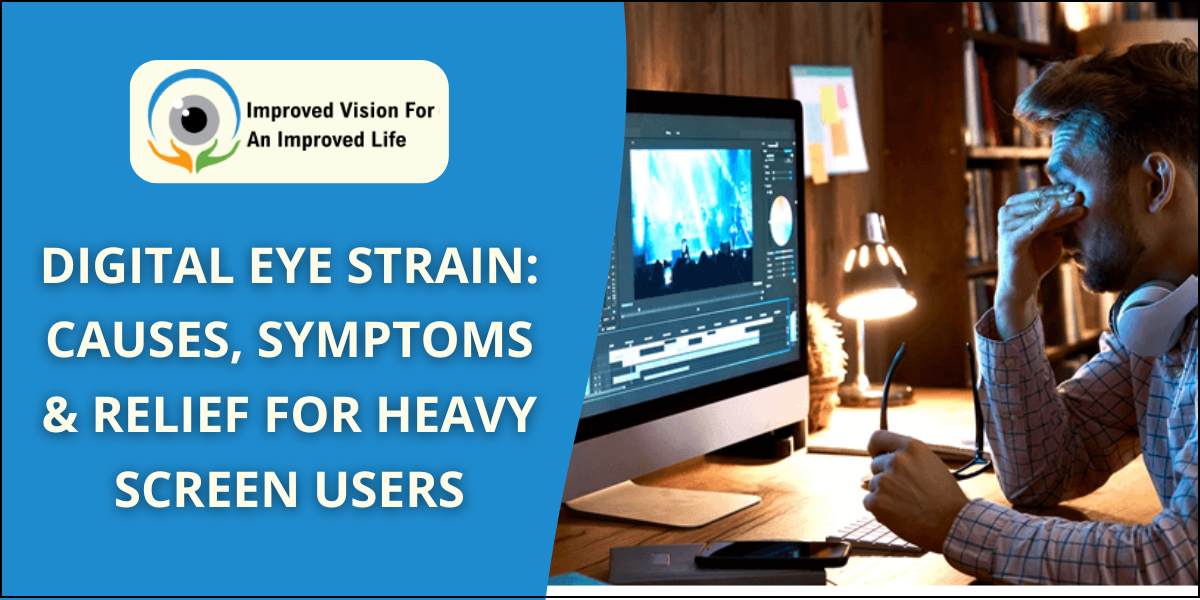
In today’s digital-first world, screens have become an inseparable part of our daily lives. From working long hours on laptops to scrolling through smartphones and binge-watching content on tablets, our eyes are constantly exposed to digital devices. While technology makes life easier, excessive screen time can take a toll on your vision. This condition is commonly known as Digital Eye Strain, also referred to as Computer Vision Syndrome.
Let’s understand what digital eye strain is, why it happens, how to recognize the symptoms, and most importantly, how heavy screen users can find effective relief.
What Is Digital Eye Strain?
Eye strain is a group of eye and vision-related problems that result from prolonged use of digital screens such as computers, smartphones, tablets, and TVs. Unlike reading a book, staring at a screen requires your eyes to constantly focus, refocus, and adjust to screen brightness, contrast, and glare.
People who spend 2 or more continuous hours on screens daily are at a higher risk, especially office workers, students, gamers, and content creators.
Common Causes of Digital Eye Strain
Eye strain doesn’t happen due to a single reason. It is usually caused by a combination of habits, environment, and screen-related factors.
1. Prolonged Screen Time
Spending long hours without breaks forces eye muscles to work continuously, leading to fatigue and discomfort.
2. Reduced Blinking
Normally, we blink around 15–20 times per minute. While using screens, blinking reduces by nearly half, causing dryness and irritation.
3. Improper Screen Distance and Angle
Screens placed too close, too far, or at an incorrect angle strain the eyes and neck muscles.
4. Glare and Poor Lighting
Reflections on screens, harsh overhead lighting, or low-light environments make eyes work harder to maintain clarity.
5. Uncorrected Vision Problems
Even minor refractive errors like near-sightedness or astigmatism can worsen eye strain when combined with heavy screen use.
Symptoms You Shouldn’t Ignore
Eye strain symptoms can range from mild discomfort to persistent vision issues. Common signs include:
-
Eye fatigue and heaviness
-
Dry, watery, or burning eyes
-
Blurred or double vision
-
Headaches, especially after screen use
-
Sensitivity to light
-
Difficulty focusing
-
Neck, shoulder, or back pain
If these symptoms continue even after resting your eyes, it’s a clear signal that your eyes need attention.
Why Heavy Screen Users Are More Vulnerable
Heavy screen users often multitask across multiple devices—laptops, smartphones, and monitors—without sufficient breaks. Long working hours, deadlines, and entertainment habits add to uninterrupted screen exposure. Over time, this continuous visual demand reduces eye comfort and productivity, affecting both work performance and overall well-being.
Effective Relief Tips for Digital Eye Strain
The good news is that digital eye strain is largely preventable and manageable with simple lifestyle and workplace adjustments.
1. Follow the 20-20-20 Rule
Every 20 minutes, look at something 20 feet away for at least 20 seconds. This relaxes eye muscles and reduces fatigue.
2. Adjust Screen Settings
-
Increase text size for comfortable reading
-
Reduce screen brightness to match room lighting
-
Use night mode or blue light filters, especially in the evening
3. Maintain Proper Screen Position
Your screen should be:
-
About 20–28 inches away from your eyes
-
Positioned slightly below eye level
-
Tilted to reduce glare
4. Blink More Often
Make a conscious effort to blink fully and frequently. This helps maintain natural eye moisture and prevents dryness.
5. Improve Your Workspace Lighting
Avoid harsh lighting and reflections. Use soft, indirect light and adjust blinds or curtains to minimize glare.
6. Use Lubricating Eye Drops
Artificial tears can help relieve dryness caused by reduced blinking during screen use. Use them as advised by an eye specialist.
7. Get Regular Eye Check-Ups
An eye examination can detect vision issues early and ensure your prescription (if any) is suitable for screen work.
Long-Term Eye Care for Screen Users
Apart from daily habits, adopting a proactive approach to eye health is essential. Take short screen-free breaks, spend time outdoors, stay hydrated, and ensure adequate sleep. Nutrition also plays a role—foods rich in vitamin A, omega-3 fatty acids, and antioxidants support overall eye health.
Conclusion
Eye strain is common among heavy screen users, but it can be easily managed with the right habits and timely care. Ignoring ongoing eye discomfort may lead to long-term vision issues.
If screen-related eye strain is affecting your daily life, consult Dr. Vasundhara Kulkarni, Eye Specialist in Moshi at Iris Eye Care, for expert diagnosis and personalized eye care.
Book your eye check-up today and protect your vision.
Frequently Asked Questions (FAQs)
1. What is digital eye strain and who is most affected by it?
Digital eye strain is eye discomfort caused by prolonged use of digital screens like computers, mobiles, and tablets. Office workers, students, gamers, and professionals who spend long hours on screens are most commonly affected.
2. Can digital eye strain cause permanent vision damage?
Digital eye strain does not usually cause permanent eye damage, but untreated symptoms can lead to chronic discomfort, frequent headaches, and reduced productivity. Proper eye care and regular breaks can prevent long-term issues.
3. How many hours of screen time can cause eye strain?
Using digital screens continuously for 2 hours or more without breaks can trigger eye strain symptoms, especially if screen posture, lighting, or vision correction is improper.
4. Do blue light glasses really help with digital eye strain?
Blue light glasses can help reduce glare and eye fatigue, especially during prolonged screen use. While they may not eliminate eye strain completely, they can improve comfort and sleep quality.
5. When should I see an eye doctor for digital eye strain?
If symptoms like blurred vision, headaches, dry eyes, or eye pain persist despite rest and lifestyle changes, it’s important to consult an eye specialist for a detailed eye examination.