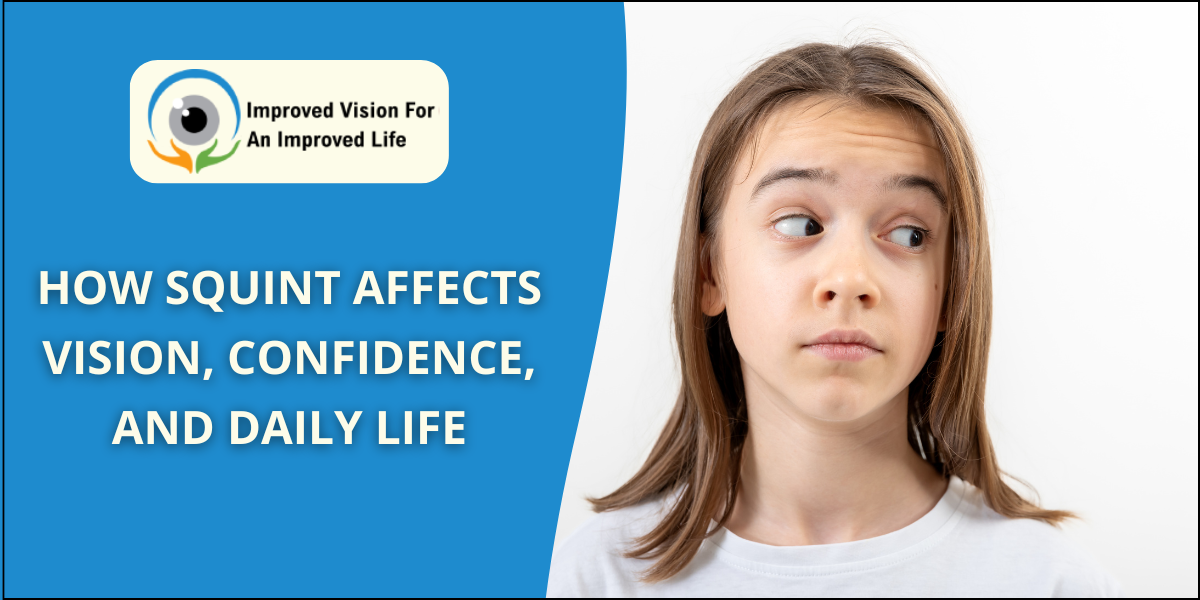
Squint, also known as strabismus, is more than just “crossed eyes.” It is a condition where the eyes do not align properly and point in different directions. For many people, especially children and young adults, squint silently affects not just how they see the world, but how the world sees them — and more importantly, how they see themselves.
If you or your child has been diagnosed with squint, or you’ve noticed one eye turning inward, outward, upward, or downward, you’re not alone. Thousands of families in India face this every year.
What Exactly is Squint?
In normal vision, both eyes work together as a team, focusing on the same object at the same time. This is called binocular vision. In squint, one eye deviates, so the brain receives two slightly different images. To avoid double vision (diplopia), the brain often starts ignoring the image from the misaligned eye — a process called suppression.
This adaptation helps avoid confusion but creates other problems over time.
How Squint Affects Vision
The impact on vision can range from mild to severe depending on the type, angle, and age of onset of the squint.
1. Reduced Depth Perception People with squint often struggle with judging distances accurately. Simple tasks like catching a ball, driving, or even pouring tea can become challenging. This happens because the brain cannot properly combine the images from both eyes.
2. Amblyopia (Lazy Eye) When the brain consistently ignores signals from one eye, that eye’s visual pathway doesn’t develop properly. This is very common in childhood squint. If not treated early (ideally before age 7-8), the weaker eye can have permanently reduced vision even if the squint is later corrected.
3. Eye Strain and Headaches Adults with untreated or late-onset squint frequently complain of tired eyes, frequent headaches, neck pain (from tilting the head to compensate), and difficulty concentrating while reading or working on screens.
4. Double Vision in Adults Unlike children, adults whose brain has already developed binocular vision cannot easily suppress the second image. This leads to troublesome double vision that affects almost every visual task.
Early Warning Signs Parents Should Watch For:
- Eyes that don’t move together
- Frequent tilting or turning of the head
- Closing one eye in bright light or while watching TV
- Bumping into objects on one side
- Poor performance in sports or academics
How Squint Influences Daily Life
Living with squint means making small but constant adjustments:
- Reading and Studying: Children may tire quickly while reading, leading to poor academic performance despite normal intelligence.
- Driving and Sports: Reduced depth perception makes night driving risky and sports participation difficult.
- Career Choices: Some people avoid careers involving public dealing, presentation skills, or precise visual work.
- Social Interactions: Maintaining eye contact becomes stressful, affecting relationships and networking.
- Emotional Drain: Constant compensation and self-consciousness can lead to mental fatigue.
The Good News: Squint is Highly Manageable
The effects of squint on vision, confidence, and daily life are not permanent if addressed timely.
Treatment Options Include:
- Glasses: Help in some accommodative squints
- Patching Therapy: Strengthens the weaker eye
- Vision Therapy / Eye Exercises: Improves coordination
- Squint Surgery: Realigns the eye muscles for better appearance and function
Don’t let squint hold you or your child back from living life with clarity and confidence.
If you’re looking for expert squint management and surgery in Moshi, Pune, consult Dr. Vasundhara Kulkarni, a highly experienced eye specialist. At Iris Eye Care, you will receive compassionate care with advanced treatment options tailored to your needs.
FAQs
1. Is squint only a cosmetic issue?
No, squint can affect vision, depth perception, confidence, and daily activities if left untreated.
2. At what age should squint be treated?
Squint should be treated as early as possible, especially in children, to prevent vision loss and lazy eye.
3. Can adults develop squint?
Yes, adults can develop squint due to nerve problems, injuries, medical conditions, or eye muscle imbalance.
4. Is squint surgery safe?
Yes, squint surgery is generally considered safe and effective when performed by an experienced eye specialist.