
You’re in your 20s or 30s, your health feels fine, and the last thing on your mind is your eyes. But here’s something worth knowing – retina problems in young adults are becoming far more common than most people expect. And the scary part? Many young adults don’t notice anything wrong until real damage has already been done.
What Is the Retina and Why Should You Care?
The retina is a thin layer of tissue sitting at the back of your eye. Its job is simple but critical – it captures light and sends visual signals to your brain. Without a healthy retina, you cannot see clearly, no matter how perfect the rest of your eye is.
Here’s the hard truth: retinal damage is usually permanent. Unlike other parts of your body, retinal cells don’t heal or grow back. That’s why early detection matters so much.
Why Are Retina Problems Rising in Young Adults?
A decade ago, retinal diseases were mostly seen in older patients. Today, eye doctors across India are seeing more and more young adults in their 20s and 30s walking in with serious retinal issues.
Several things are driving this shift:
- Screen time has exploded – most young adults spend 7–9 hours a day looking at phones, laptops, and TVs
- Myopia (short-sightedness) is increasing rapidly – and high myopia physically stretches and weakens the retina
- Diabetes and high blood pressure – are now showing up in younger people, both of which damage retinal blood vessels
- Stress levels are at an all-time high, – which is directly linked to certain retinal conditions like Central Serous Retinopathy
- Routine eye check-ups are often skipped, – meaning problems go undetected for too long
The bottom line: modern lifestyle habits are putting young retinas under serious stress.
6 Warning Signs of Retina Problems You Should Never Ignore
Retina problems in young adults often come with warning signs that feel easy to brush off. Don’t. Here’s what to watch for:
- Sudden flashes of light – especially in a dark room or when you move your eyes quickly
- A flood of new floaters – those tiny dots or cobweb shapes drifting across your vision
- A dark curtain or shadow covering part of your sight
- Blurry or distorted vision – that comes on quickly
- Straight lines looking wavy – like a door frame or table edge appears bent
- Loss of side vision – things disappearing from the edges of your view
Any one of these symptoms is a reason to see an eye doctor immediately. Don’t wait to see if it passes.
Common Retinal Conditions Found in Young Adults
Retinal Detachment
This is when the retina peels away from the back of the eye. It cuts off its blood supply and vision can be lost permanently within hours. Young adults with high myopia are most at risk. This is a true eye emergency.
Diabetic Retinopathy
With Type 2 diabetes rising in young adults, diabetic retinopathy is no longer just an older person’s disease. High blood sugar slowly damages the tiny blood vessels in the retina – often before any vision symptoms appear. Regular check-ups are the only way to catch it early.
Central Serous Retinopathy (CSR)
Fluid builds up under the retina, causing blurry or distorted vision – usually in one eye. This condition is surprisingly common in stressed young men between 25 and 45. Long screen hours and use of certain medicines can trigger it.
High Myopia-Related Damage
If your glasses prescription is –5D or more, your eyeball is physically longer than normal. This stretches the retina thin, making it more likely to develop tears or holes over time. Many young adults with high myopia don’t realise their retina is at risk until something goes wrong.
How Are Retinal Problems Diagnosed?
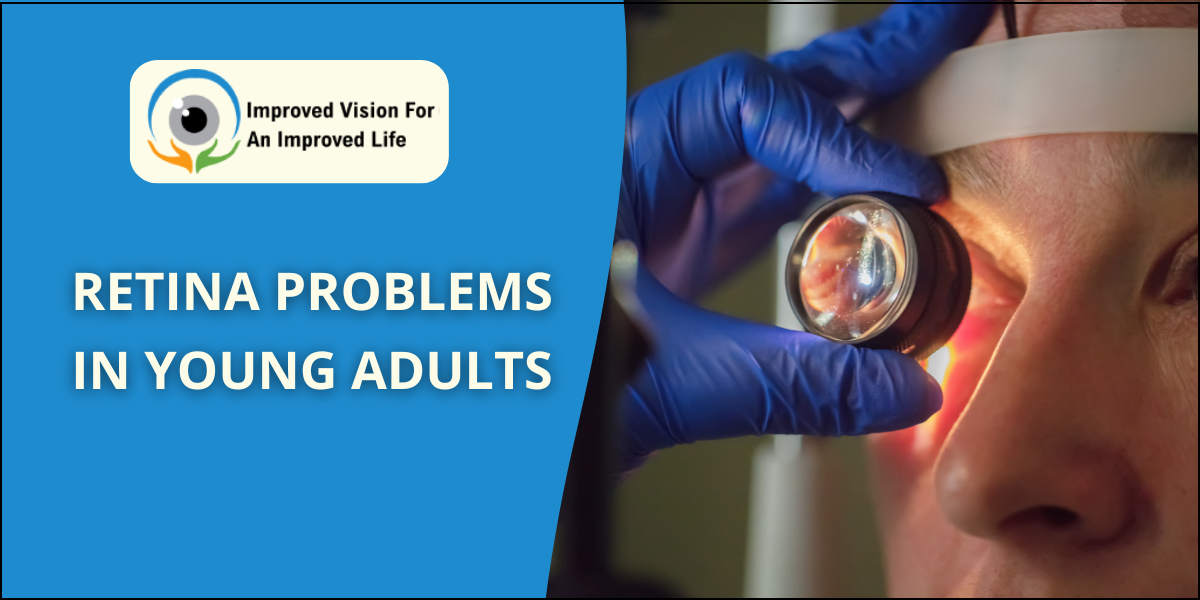
A basic vision test won’t show retinal issues. You need a dilated eye exam, where drops are used to widen the pupil so the doctor can see the full retina clearly.
Other tests include:
- OCT scan – shows a detailed cross-section of the retinal layers
- Fundus photography – takes pictures of the retina to track changes
- Fluorescein angiography – checks blood flow in the retina using a dye
These tests are painless and quick – but they can catch problems that would otherwise stay hidden for months or years.
4 Simple Ways to Protect Your Retina
- Follow the 20-20-20 rule – every 20 minutes, look at something 20 feet away for 20 seconds
- Get a yearly dilated eye exam,- especially if you have myopia, diabetes, or a family history of eye disease
- Keep blood sugar and blood pressure in check – they directly affect your retinal blood vessels
- Report new floaters or flashes immediately – never assume they’re harmless
FAQ
1. Can a 25-year-old really get retinal detachment?
Yes. It can happen at any age, especially in people with high myopia or a history of eye injury. It’s a medical emergency that needs same-day attention.
2. Are floaters always dangerous?
Old floaters you’ve had for years are usually harmless. But a sudden rush of new floaters – especially with flashes – needs urgent evaluation.
3. Does screen time damage the retina directly?
Not directly for most people. But it drives myopia progression and causes people to ignore early symptoms – both of which can lead to serious retinal damage over time.
4. How often should I get my retina checked?
If you have high myopia or diabetes, once a year at minimum. Your eye doctor may suggest more frequent visits based on your individual situation.
If anything felt familiar – a symptom you’ve been ignoring or a risk factor that applies to you – please don’t wait. Retina problems in young adults are treatable when caught early, but the window for action can be very short.
Dr. Vasundhara Kulkarni is a trusted eye specialist in Moshi, Pune, known for diagnosing and treating a wide range of eye conditions. She founded Iris Eye Care Clinic to provide honest, thorough, and compassionate eye care to families in the area.
Book your eye check-up at Iris Eye Care Clinic today – because your vision is worth protecting now, not later.