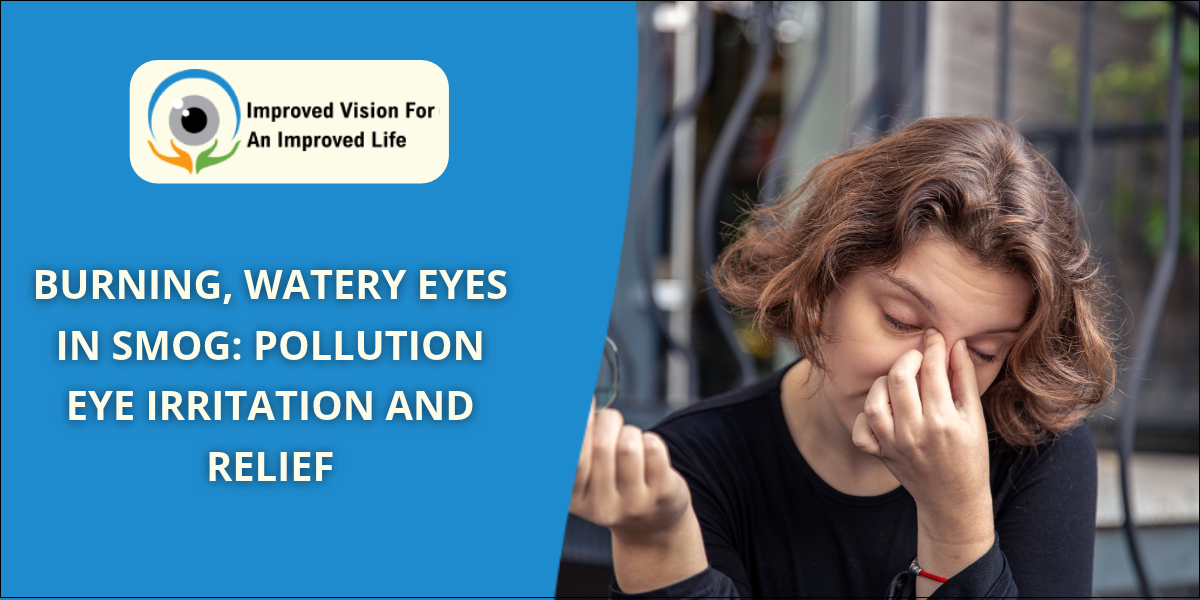
On days when smog settles over the city, many people notice the same thing: eyes that burn, sting and will not stop watering. This is a common pollution eye irritation. In most cases it is mild and settles once the air clears or the eyes are protected. Sometimes, though, it points to an allergy, dry eye or an infection that needs treatment. This guide explains why burning, watery eyes in smog happen, what may help at home, and which signs mean you should see an eye doctor.
Why Does Smog Make Your Eyes Burn and Water?
The front surface of the eye is covered by a thin tear film that keeps it smooth, moist and protected. Smog contains tiny particles (PM2.5 and PM10), smoke, dust and gases such as nitrogen dioxide and ozone. When these land on the eye, they can:
- Irritate the surface of the cornea and conjunctiva, causing a gritty, burning feeling
- Disturb the tear film, so tears evaporate faster and the eye becomes dry
- Trigger reflex tearing, where the eye floods with watery tears to wash the irritant away
- Set off allergy, with itching, redness and swelling of the eyelids in people prone to it
This is why eyes can feel dry and watery at the same time. Watering is a protective reaction and does not always mean the eye is well lubricated.
Common Symptoms of Pollution Eye Irritation
- Burning or stinging in both eyes
- Watering, with or without a gritty or sandy feeling
- Redness of the white of the eye
- Itching and a strong urge to rub
- Mild swelling of the eyelids
- Blurred vision that clears after blinking
- Sensitivity to bright light
Symptoms usually affect both eyes and ease within a few hours after moving into cleaner air.
Who Is More Likely to Be Affected?
- Contact lens wearers, because particles can collect under the lens
- People with dry eye or those who spend long hours on screens
- Anyone with allergies, hay fever or asthma
- Children and older adults, who may find it harder to protect their eyes
- Two-wheeler riders, traffic personnel and outdoor workers
- People who have had eye surgery or have existing eye surface disease
If screens are part of the problem, our article on dry eyes from screen time may help.
Relief Measures You Can Try at Home
Do Not Rub Your Eyes
Rubbing can scratch the cornea and push particles across the eye surface. Resist the urge, even when the itch is strong.
Rinse and Wash
Wash your hands first. Then rinse the eyes gently with clean, cool water or a sterile saline eye wash. Wash your face when you come indoors to remove dust from the eyelids and lashes.
Use Lubricating Eye Drops
Preservative-free artificial tears can help dilute irritants and restore moisture. Use only the drops your doctor or pharmacist recommends, and follow the label. Avoid “get the red out” drops and any steroid drops unless an eye doctor has prescribed them, since they can cause harm if used without supervision.
Apply a Cold Compress
A clean, cool, damp cloth over closed eyes for a few minutes can calm burning and swelling.
Give Contact Lenses a Break
On smoggy days, switch to glasses if you wear lenses. Never sleep with lenses on, and replace them as advised. Ask your eye doctor about lens types and care routines that suit your eyes.
Avoid Home Remedies
Do not put rose water, tea bags, kajal, honey or any homemade drops in your eyes. They are not sterile and can bring infection.
Ways to Protect Your Eyes in Smog
- Wear wraparound sunglasses or protective glasses outdoors. Riders should use a visor or goggles.
- Reduce time outdoors during peak smog hours, usually early morning and late evening in winter.
- Keep windows closed on high-pollution days and use a HEPA air purifier indoors if possible.
- Keep indoor air from becoming too dry. A bowl of water or a humidifier can help.
- Blink often during screen use and take regular breaks.
- Drink enough water and avoid smoking or sitting near smoke.
Is It Smog Irritation, Allergy or Infection?
Smog irritation usually causes burning and watering in both eyes without thick discharge. Allergy brings strong itching and swelling. Infection may cause sticky yellow or green discharge, lids stuck together in the morning, or a red eye that is worsening in one eye. You can learn more about eye allergies, and how infections differ, in our guide to conjunctivitis.
When to See an Eye Doctor
Do not wait for the air to clear if you have any of the following:
- Severe or increasing eye pain
- A drop in vision or vision that stays blurred
- Strong sensitivity to light
- A white or grey spot on the clear part of the eye
- Thick discharge, or swelling around the eye
- Symptoms that last more than two to three days, or keep coming back
- A painful red eye while wearing contact lenses
- Any chemical splash. Rinse with plenty of clean water at once and seek care.
What an Eye Examination Involves
If symptoms persist, an eye doctor will ask about your exposure, lens use and allergies, then examine the eye under a slit lamp, a microscope with a bright light. The doctor looks at the eyelids, the tear film and the clear cornea, may use a harmless dye to detect surface scratches or dry patches, and checks whether an infection is present. Treatment depends on the finding and may include lubricating drops, allergy medicines, lid hygiene or, if needed, treatment for infection. Most people need only simple measures, but a proper check rules out conditions that need more care.
Frequently Asked Questions
Can smog damage my eyes permanently?
Short exposure usually causes temporary irritation. Long-term effects of air pollution on the eyes are still being studied, and ongoing symptoms deserve an eye examination.
Are watery eyes a sign of dry eye?
They can be. When the surface is dry or irritated, the eye makes reflex tears, so it may feel dry and watery together.
Which eye drops are safe to use in smog?
Lubricating, preservative-free artificial tears are commonly used, but ask your doctor which product suits you. Avoid steroid and redness-relief drops without advice.
Should children wear glasses outdoors on smoggy days?
Protective glasses can reduce dust reaching the eyes. Keep outdoor play shorter on high-pollution days and see a doctor if symptoms last.
How long does pollution eye irritation last?
Mild irritation often settles within hours to a couple of days after exposure ends. If it continues, get your eyes checked.
Can I wear contact lenses in smog?
Many people prefer glasses on smoggy days, since lenses can trap particles. Ask your eye doctor what suits your eyes.
Eye Irritation That Does Not Settle? Book an Eye Check
If your eyes keep burning and watering, or you notice any warning sign above, get them examined. Dr. Vasundhara Kulkarni, an eye specialist with 20+ years of experience, consults at Iris Eye Care & Surgical Centre in Moshi, Pune.
- Address: 5th Floor, BARCODE, Borate-Jambhulkar Chowk, 518, 519, Shiv Rd, Bhoradewadi, Moshi, Pimpri-Chinchwad, Maharashtra 412105
- Phone: +91 8177891453
- Email: info@iriseyecare.co.in
Call the clinic or use the contact page to book an appointment, and confirm timings when you call.