
Are Your Eyes Feeling Dry After Hours of Screen Use?
In today’s digital world, screens have become an unavoidable part of our daily lives. Whether you’re working on a laptop, scrolling through your smartphone, attending online classes, or binge-watching your favorite series, prolonged screen exposure can take a toll on your eye health. One of the most common complaints among screen users is dry eyes.
If your eyes often feel irritated, itchy, watery, or tired after long hours of screen time, you may be experiencing Digital Eye Strain or Dry Eye Syndrome. Studies show that prolonged screen use reduces blinking frequency, causing tears to evaporate faster and leading to eye discomfort.
At Iris Eye Care & Surgical Centre, Eye Specialist in Moshi, Dr. Vasundhara Kulkarni, helps patients identify the underlying causes of dry eyes and provides effective treatment solutions to restore eye comfort and vision.
What Causes Dry Eyes from Screen Time?
Your eyes rely on a healthy tear film to stay lubricated and comfortable. Every time you blink, tears spread across the surface of your eyes, keeping them moist and protected.
However, when using digital devices, people tend to blink less frequently than normal. Research suggests that screen use can significantly reduce blink rate, causing tears to evaporate more quickly.
Common causes of screen-related dry eyes include:
1. Reduced Blinking
Normally, we blink around 15–20 times per minute. During screen use, this number can drop dramatically, resulting in inadequate tear distribution and increased dryness.
2. Prolonged Screen Exposure
Staring at screens for hours without taking breaks forces your eyes to focus continuously, leading to fatigue and dryness.
3. Poor Screen Position
Screens positioned too high cause your eyes to remain more open, increasing tear evaporation and worsening dry eye symptoms.
4. Air Conditioning and Indoor Environments
Many offices and homes use air conditioners, fans, or heaters that reduce humidity levels, making tear evaporation occur faster.
5. Existing Eye Conditions
People with pre-existing dry eye disease, contact lens users, or those with uncorrected vision problems may experience more severe symptoms during screen use.
Signs and Symptoms of Dry Eyes
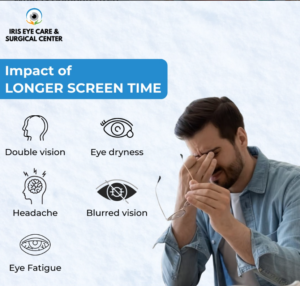
Dry eyes can affect your productivity, concentration, and overall quality of life. Common symptoms include:
- Burning sensation in the eyes
- Itching or irritation
- Redness
- Watery eyes
- Gritty feeling, as if something is in the eye
- Blurred vision
- Sensitivity to light
- Eye fatigue
- Difficulty focusing after prolonged screen use
These symptoms often worsen toward the end of the day or after extended device usage.
How Screen Time Affects Your Eye Health
Many people assume that only older adults develop dry eyes. However, eye specialists are seeing an increasing number of young professionals, students, and children experiencing dry eye symptoms due to excessive screen exposure.
When your eyes remain dry for long periods, the tear film becomes unstable. This can lead to inflammation, discomfort, fluctuating vision, and, in severe cases, damage to the eye surface.
The good news is that early intervention and simple lifestyle changes can significantly improve symptoms.
Effective Relief for Dry Eyes from Screen Time
Follow the 20-20-20 Rule
One of the easiest ways to reduce digital eye strain is the 20-20-20 rule.
Every 20 minutes:
- Look at something 20 feet away
- For at least 20 seconds
This helps relax your eye muscles and reduce strain caused by prolonged screen focus.
Blink More Frequently
Make a conscious effort to blink fully and regularly while using screens. Proper blinking helps spread tears evenly across the eye surface and prevents dryness.
Adjust Screen Position
Position your screen slightly below eye level and maintain a comfortable viewing distance. This reduces eye opening and minimizes tear evaporation.
Use Lubricating Eye Drops
Artificial tears or lubricating eye drops can provide immediate relief from dryness and irritation. An eye specialist can recommend the most suitable option based on your condition.
Improve Workplace Ergonomics
Reduce screen glare, adjust brightness levels, and ensure proper lighting in your workspace. These small changes can make a significant difference in eye comfort.
Stay Hydrated
Drinking adequate water throughout the day supports healthy tear production and overall eye health.
Take Regular Breaks
Avoid continuous screen use for extended periods. Short breaks throughout the day help reduce eye fatigue and dryness.
Frequently Asked Questions (FAQs)
1. Can too much screen time cause dry eyes?
Yes. Prolonged screen use reduces blinking frequency, causing tears to evaporate faster and leading to dry eye symptoms.
2. What are the first signs of dry eyes?
Common early signs include burning, itching, redness, watery eyes, blurred vision, and eye fatigue.
3. Does the 20-20-20 rule really help?
Yes. Studies have shown that taking regular visual breaks can reduce symptoms of digital eye strain and eye discomfort.
4. Are dry eyes permanent?
Not always. Many cases improve with lifestyle changes, lubricating eye drops, and professional treatment. However, chronic dry eye disease may require ongoing management.
Book Your Eye Consultation Today
Don’t let screen time affect your comfort, productivity, and vision.
If you’re experiencing dry, irritated, or tired eyes, seek expert care from Dr. Vasundhara Kulkarni, Eye Specialist in Moshi, at Iris Eye Care & Surgical Centre.