
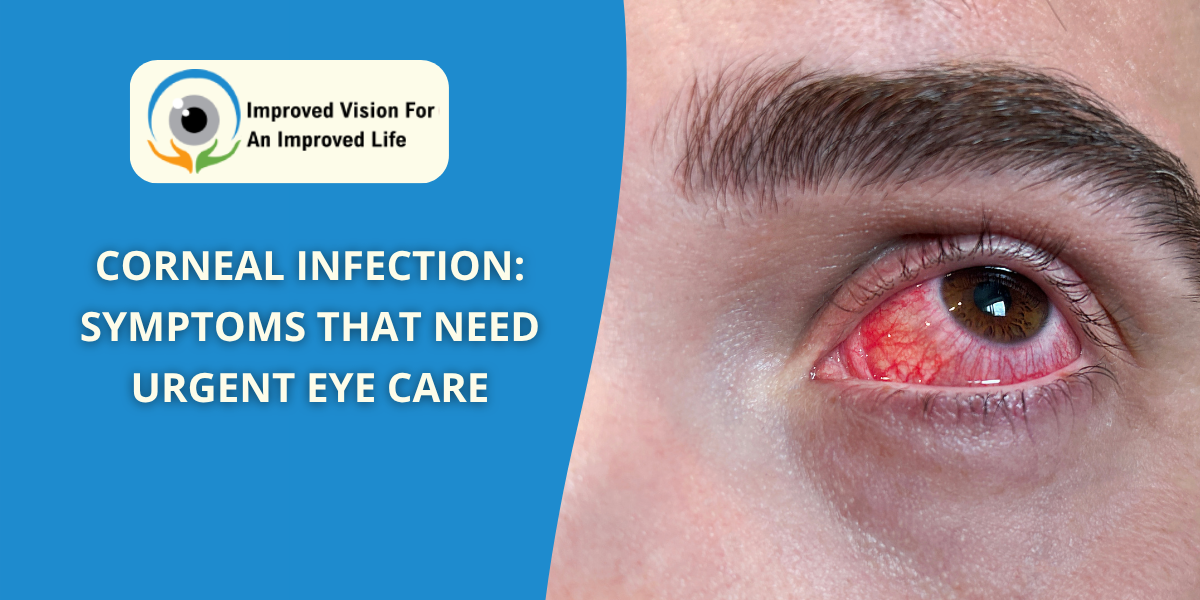
A red, irritated eye is easy to brush off. Often it is just irritation, an allergy or conjunctivitis. But when an infection affects the cornea, the clear dome at the front of your eye, waiting it out can put your sight at risk. Knowing the corneal infection symptoms that need urgent eye care helps you act at the right time.
What Is a Corneal Infection?
A corneal infection, also called infectious keratitis, happens when germs invade the cornea. The cornea works like a clear window that lets light into the eye and helps focus it. When it becomes infected, it can swell, turn cloudy and, in some cases, develop an open sore called a corneal ulcer.
Several types of germs can cause it:
- Bacteria, often linked to contact lens use or a minor scratch on the eye
- Viruses, such as the herpes simplex virus
- Fungi, which may follow an injury from plant matter such as a twig, leaf or crop stalk
- Acanthamoeba, a tiny organism found in tap water, pools and soil, seen mostly in contact lens wearers
Each type needs a different treatment, so only an eye examination can tell you which one you have.
Common Corneal Infection Symptoms
Early symptoms can look like other common eye problems, but corneal infections tend to be more painful and usually get worse rather than better. Watch for:
- Eye pain that feels deeper or sharper than ordinary irritation
- Redness, often concentrated around the coloured part of the eye
- Blurred or hazy vision
- Sensitivity to light, also called photophobia
- Watering or a discharge from the eye
- A gritty feeling, as if something is stuck in the eye
- A white or grey spot on the cornea
Symptoms That Need Urgent Eye Care
Some symptoms should not wait for a routine appointment. See an eye doctor the same day if you notice any of the following.
Pain That Keeps Getting Worse
Pain that keeps increasing, or pain that wakes you at night, suggests something more serious than simple irritation.
A White Spot on the Cornea
A white, grey or cloudy patch on the clear part of the eye can be a sign of a corneal ulcer. This needs prompt assessment.
A Sudden Drop in Vision
If your vision becomes blurry or dim and does not clear with blinking, the infection may be affecting the centre of the cornea.
Strong Light Sensitivity
Struggling to open your eye in normal room light, or needing to keep it shut, is a sign that the cornea may be inflamed.
A Red, Painful Eye While Wearing Contact Lenses
Remove the lenses straight away, keep them out and see an eye doctor. Bring the lenses and case, because your doctor may want to look at them.
Symptoms After an Eye Injury
A scratch or poke to the eye, especially from plant material, soil or a fingernail, followed by pain and redness over the next day or two, needs to be checked.
Who Is More at Risk?
Anyone can develop a corneal infection, but some factors raise the chance:
- Contact lens wear, particularly sleeping in lenses, poor lens hygiene or rinsing lenses and cases with tap water. Our article on whether you can sleep with contact lenses explains why overnight wear is risky.
- Eye injuries, including small scratches during farming or gardening
- Dry eye and other conditions that weaken the surface of the eye
- Steroid eye drops used without medical supervision
- Lowered immunity, including poorly controlled diabetes
Damp weather can also raise the risk, so these tips to avoid eye infections during the monsoon are worth following during the rainy season.
Is It a Corneal Infection or Conjunctivitis?
Many people mistake a corneal infection for “eye flu”. Conjunctivitis usually causes redness, stickiness and itching, but vision generally stays normal and pain is mild. A corneal infection is more likely to cause real pain, blurred vision and strong light sensitivity. If unsure, get checked rather than treating it yourself.
What to Do If You Suspect a Corneal Infection
While you arrange to see an eye doctor:
- Take out your contact lenses and keep them out
- Do not rub the eye
- Avoid over-the-counter drops, especially steroid drops, unless an eye doctor has prescribed them
- Skip home remedies such as rose water, breast milk or herbal liquids in the eye
How Is It Diagnosed and Treated?
An eye doctor examines the cornea with a slit lamp, a microscope with a bright light that shows the eye’s surface in detail. Sometimes a small sample is taken from the cornea to identify the germ.
Treatment depends on the cause and how severe the infection is. It may include antibiotic, antifungal or antiviral eye drops, which sometimes need to be used very often in the first few days. Follow-up visits show whether the infection is responding. In severe cases, surgery such as a corneal transplant may be considered. You can read more about these options on our cornea treatment page.
Finish the full course of treatment even if your eye starts to feel better.
How to Lower Your Risk
- Wash and dry your hands before handling contact lenses
- Never sleep, swim or shower in lenses unless your eye doctor has advised it
- Use fresh lens solution only, never tap water or saliva
- Wear protective glasses for gardening, farming, construction or DIY work
- Get any eye injury checked early
If you wear lenses, regular reviews at a contact lens clinic can help catch problems early.
Frequently Asked Questions
Can a corneal infection go away on its own?
Usually not. Mild irritation can settle, but a true corneal infection generally needs prescription treatment. Waiting can let it spread deeper into the cornea.
Can corneal infections cause permanent vision loss?
Severe or untreated infections can leave a scar on the cornea that affects vision. Early diagnosis and treatment improve the chances of a good recovery.
Are corneal infections contagious?
Keratitis is not usually passed between people, but some germs behind it spread through touch, so avoid sharing towels or eye makeup.
Can I wear contact lenses after a corneal infection?
Only after your eye doctor confirms the infection has healed. They may also suggest new lenses or changes to your lens care.
How long does a corneal infection take to heal?
It depends on the type of germ, how deep the infection is and how early treatment starts. Some improve within days, while others need weeks of treatment and follow-up.
Get a Painful Red Eye Checked Without Delay
If you notice any of the urgent symptoms above, please do not wait for them to settle. At Iris Eye Care & Surgical Centre in Moshi, Pune, Dr. Vasundhara Kulkarni (MBBS, DO), an ophthalmologist with over 20 years of experience in eye care, diagnoses and treats corneal conditions, including corneal infections and ulcers.
- Address: 5th Floor, BARCODE, Borate-Jambhulkar Chowk, 518, 519, Shiv Rd, Bhoradewadi, Moshi, Pimpri-Chinchwad, Maharashtra 412105
- Phone: +91 8177891453
- Email: info@iriseyecare.co.in
Call today or book an appointment online. Getting your eye examined early gives it a better chance of healing well.